
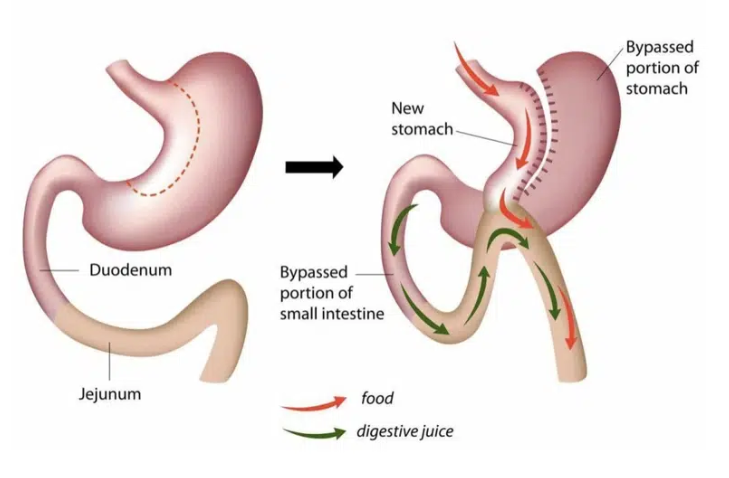
Patients who undergo Mini Gastric Bypass (also known as One Anastomosis Gastric Bypass) pass through three dietary stages after surgery:
Stage one: The First Month Diet
The purpose of this stage is to protect the internal staple line and allow the stomach to heal completely.
Stage Two: The Weight-Loss Phase
This stage focuses on healthy eating habits that support effective weight loss during the first months after surgery.
Stage Three: The Post-Ideal Weight Lifestyle
This stage represents a long term balanced lifestyle aimed at maintaining weight loss and preventing weight regain.
Below is a detailed explanation of each phase:
tage One: The First Month Diet After Mini Gastric Bypass
Week 1
Patients should consume clear liquids only, including:
- Packaged fruit juices (any flavor).
- Clear soups such as chicken broth or meat broth
- Warm herbal drinks such as: Anise, Mint, Linden, Cinnamon, Caraway and Clove
Sugar should be avoided to prevent bloating and dumping syndromes
On days 6 and 7, the following may be added: Milk pudding, Jelly and/or Lentil soup
Liquids should remain the main component of the diet.
Week 2
Food should be mashed thoroughly using a fork, then eaten slowly in small quantities.
Use a small teaspoon and consume 3–5 teaspoons per meal, slowly and carefully.
Allowed foods include:
- Mashed potatoes
- Mashed zucchini
- Mashed sweet potatoes
- White cheese
- Cottage cheese
- Boiled eggs (mashed)
- Fried eggs
warm herbal drinks may continue.
Diet sweeteners may be used, up to two packets daily.
Week 3
The following foods may be introduced:
- Eggs
- White cheese
- Cooked or raw green vegetables such as: Zucchini, Okra, Peas, Spinach and Green beans
Warm liquids may still be consumed. Small amounts of oil or butter are allowed, but deep fried foods should be avoided.
Week 4
Proteins are gradually introduced, including:
Meat, Poultry, Fish, Shrimp, Tuna, Minced, meat, and Chicken liver
You should begin with very small quantities, chew thoroughly, and avoid extremely hot foods.
Important Warnings During the First Month
Failure to follow the first month diet plan may lead to serious complications.
During the first month patients must avoid:
- Smoking
- NSAIDs
- Alcohol
Patients should follow the diet instructions exactly.
The stomach staple line is still healing and can only tolerate the foods listed above.
Consuming carbohydrates such as bread, rice, pasta, or beans during the first two months may lead to dangerous complications.
Patients should drink 12–15 cups of fluids daily during the first year to prevent: Dehydration, Dizziness, Headache, and Blood clots
Urine color should remain light and clear, indicating proper hydration.
Stage Two: Weight Loss Diet After Mini Gastric Bypass
This phase usually lasts 4 months after surgery.
Average Weight Loss
About 3-4 kg per month.
Diet Composition
- 35% protein
- 35% healthy fats
- 30% carbohydrates
Daily calorie intake should not exceed 800-1000 calories.
Typical daily intake includes:
- 50 g protein (about 200 g meat)
- 50 g carbohydrates
- 10–20 g fat
Patients should eat protein first, followed by vegetables, and carbohydrates last.
Maximum daily carbs intake should not exceed:
Two slices of diet toast, ¼ loaf of traditional bread or 3 teaspoons of rice
Fruit may be eaten twice weekly, excluding high-calorie fruits such as:
Mango, Grapes, Figs, and Dates
Phase Three: Long-Term Lifestyle After Reaching the Ideal Weight
This stage begins once BMI is below 30.
The goal is to maintain weight loss and prevent regain.
Guidelines include:
- Carbohydrates are allowed up to twice daily
- Prefer only one carbohydrate type per meal
- Fruit and milk allowed twice weekly
- Nuts allowed occasionally during holidays or summer, no more than once every 2–3 months
The following should be avoided permanently:
- White bread, Oats, Popcorn, Soda, and Carbonated drinks
- Desserts may be consumed once monthly.
- Protein and vegetables may be eaten freely.
- Sugar and honey should be avoided.
- Diet sweeteners may be used up to two packets daily.
- That extremely painful or again is there anyone.
- Starchy foods are a key food group in healthy eating
Frequently asked questions
Failure to follow the first month diet plan may lead to serious complications. During the first month, the stomach staple line is still healing and can only tolerate the specific foods listed. Consuming carbohydrates such as bread, rice, pasta, or beans during the first two months may lead to dangerous complications. Additionally, you must strictly avoid smoking, NSAIDs, and alcohol during this period.
During the weight-loss phase (which lasts about 4 months after surgery), you can expect to lose approximately 3–4 kg per month. Your daily calorie intake should not exceed 800–1000 calories, with a composition of 35% protein, 35% healthy fats, and 30% carbohydrates. You should eat protein first, then vegetables, and carbohydrates last. Maximum daily carbs are limited to two slices of diet toast, ¼ loaf of traditional bread, or 3 teaspoons of rice. Fruits are allowed only twice weekly, excluding high-calorie fruits like mango, grapes, figs, and dates.
Once you reach your ideal weight (BMI below 30), the following should be avoided permanently:
White bread
Oats
Popcorn
Soda and carbonated drinks
Desserts may be consumed only once monthly. Sugar and honey should be avoided, but diet sweeteners may be used up to two packets daily. Nuts are allowed only occasionally (during holidays or summer, no more than once every 2–3 months). Protein and vegetables may be eaten freely.