
The Difference Between Mini Gastric Bypass and Roux-en-Y Gastric Bypass
AA lthough both operations aim to achieve significant weight loss and improve metabolic health, there are several important differences between them.
- Number of Surgical Connections
Mini Gastric Bypass
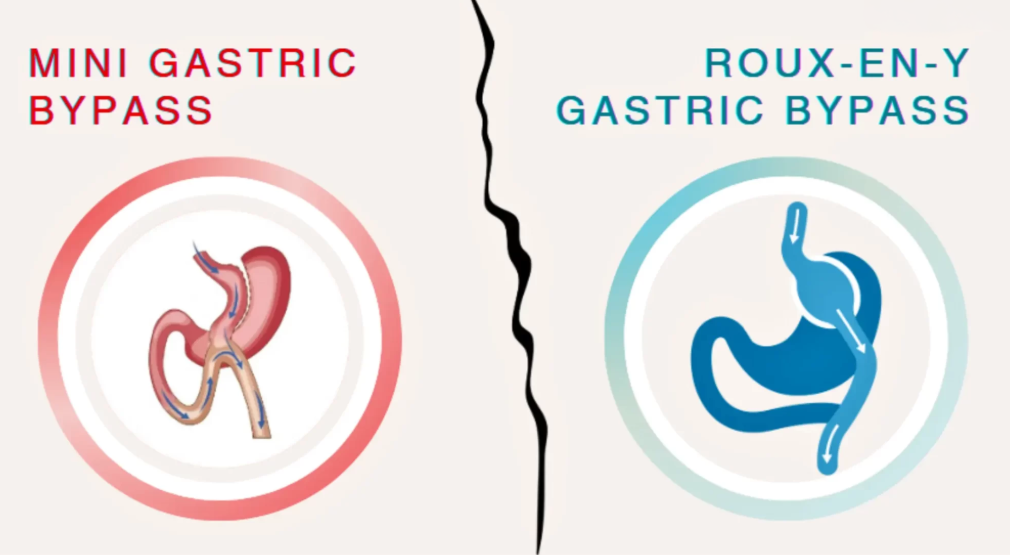
Mini gastric bypass involves a single connection (anastomosis) between the stomach and the small intestine.
The surgeon creates a long narrow gastric pouch and connects it directly to a loop of the small intestine.
Roux-en-Y Gastric Bypass
Roux-en-Y gastric bypass involves two surgical connections:
- A connection between the stomach pouch and the small intestine.
- A second connection between two segments of the intestine.
Because of this, Roux-en-Y Gastric Bypass is considered technically more complex.
- Duration of Surgery
Mini Gastric Bypass
- Technically simpler
- Usually requires less operative time
Roux-en-Y Gastric Bypass
- More technically demanding
- Typically requires longer operative time
- Expected Weight Loss
Both procedures are highly effective in achieving long-term weight loss.
Patients typically lose 70–100% of their excess body weight within 12–18 months after surgery, depending on lifestyle, dietary compliance, and metabolic factors.
Some studies suggest that mini gastric bypass may produce slightly greater weight loss due to a stronger malabsorptive effect.
- Bile Reflux
In Mini Gastric Bypass, a small percentage of patients may develop bile reflux.
This complication is relatively uncommon and usually responds well to medical treatment.In Roux-en-Y Gastric Bypass, the Roux-en-Y configuration largely prevents bile from reaching the stomach pouch and esophagus.
- Treatment of Severe GERD
Roux-en-Y Gastric Bypass is considered one of the best surgical treatments for severe gastroesophageal reflux disease (GERD).
For this reason, surgeons often prefer the Roux-en-Y Gastric Bypass for patients suffering from severe reflux symptoms.
- Vitamin and Mineral Deficiency
Both procedures may lead to deficiencies in certain nutrients such as:
- Iron
- Vitamin B12
- Calcium
However, due to the stronger malabsorptive component, Mini Gastric Bypass may carry a slightly higher risk of nutritional deficiencies, making long-term supplementation essential.
Conclusion
Both Mini Gastric Bypass and Roux-en-Y Gastric Bypass are highly effective bariatric procedures.
The choice between them depends on several factors, including:
- Body mass index (BMI)
- Presence of GERD
- Previous abdominal surgery
- Patient metabolic conditions
Roux-en-Y Gastric Bypass is generally considered a better option than mini gastric bypass in certain revision cases, particularly in the following situations:
- Severe gastric torsion and hiatal hernia.
- After previous restrictive procedures, such as VBG or sleeve gastrectomy
- In patients with Barrett’s esophagus.