
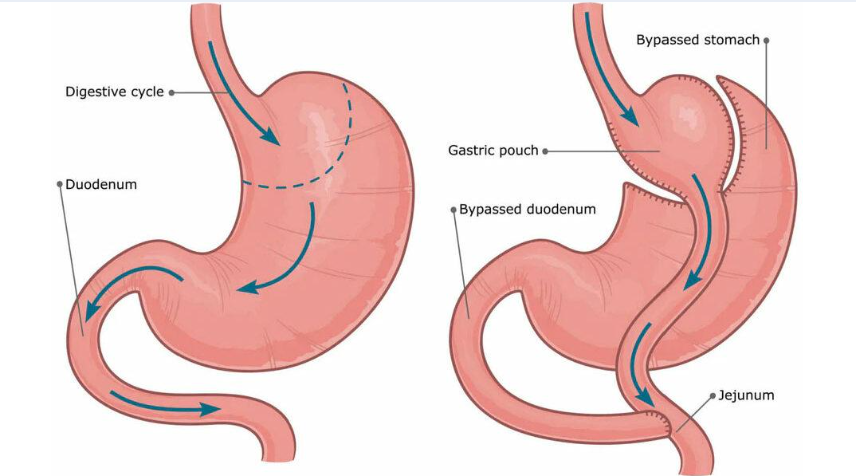
What is Roux-en-Y Gastric Bypass?
RRoux-en-Y Gastric Bypass is one of the oldest and most well established bariatric surgeries worldwide. It is considered a highly effective procedure for achieving significant and sustained weight loss, while also improving or resolving many obesity related diseases such as type 2 diabetes and hypertension.
The principle of the operation is based on reducing the stomach size and changing the pathway of food through the digestive system. This leads to both reduced food intake and partial reduction of calorie absorption.
How is Roux-en-Y Gastric Bypass Performed?
The procedure is performed laparoscopically (keyhole surgery) through 4–6 very small incisions in the abdominal wall, each measuring approximately 0.5–1 cm.
During the operation:
- A small gastric pouch is created at the upper part of the stomach with a capacity of approximately 30–50 ml.
• This pouch is separated from the remaining stomach and becomes the only part receiving food.
The pouch is then connected directly to a segment of the small intestine, bypassing:
- the remaining stomach
- the duodenum
- part of the proximal small intestine
As a result, food passes directly from the small stomach pouch into the small intestine.
How Does Roux-en-Y Gastric Bypass Cause Weight Loss?
Classic gastric bypass promotes weight loss through three mechanisms acting simultaneously.
- Reduced Food Intake
Because of the small gastric pouch, patients feel full after eating very small amounts of food.
- Reduced Calorie Absorption
Since part of the small intestine is bypassed, nutrient absorption is reduced by approximately 30%, meaning that about 70% of calories are absorbed instead of 100%.
- Hormonal Effects
The procedure leads to important hormonal changes in the digestive system.
These include:
- Increased GLP-1
- Increased GLP-2
- Decreased Ghrelin, the hormone responsible for hunger
These hormonal changes help:
- reduce appetite
- improve insulin sensitivity
- reduce or eliminate insulin resistance
What Do Surgical Incisions Look Like?
The surgery is performed laparoscopically through 3–5 small abdominal incisions.
The size of the incisions usually ranges between 0.5 cm and 1.5 cm.
The wounds are closed using cosmetic sutures to minimize visible scars.
- A small gastric pouch is created at the upper part of the stomach with a capacity of approximately 30–50 ml.
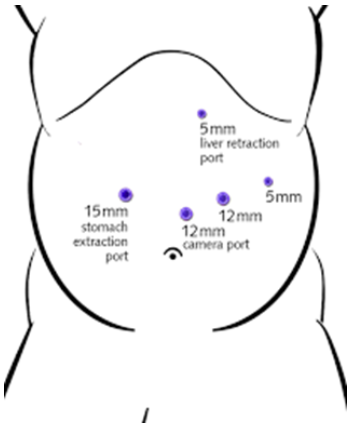
- The number and size of the incisions may vary depending on:
- patient anatomy
- Liver Size
- Stomach Shape
The primary priority is performing the operation safely and correctly to achieve the desired weight-loss outcome.
Expected Weight Loss After Classic Gastric Bypass
Weight loss typically begins rapidly during the first few months after surgery.
On average, patients lose approximately 60% to 80% of excess body weight within 12–18 months after the procedure.
The rate of weight loss varies depending on several factors:
- Pre-operative weight
• Compliance with dietary instructions
• Physical activity level
• Long-term lifestyle habits
Which Diseases Can Improve After Gastric Bypass?
Classic gastric bypass can significantly improve or even resolve several obesity-related medical conditions, including:
Type 2 Diabetes
Complete remission of diabetes may occur within the first month after surgery, allowing patients to discontinue diabetes medications or insulin.
Gastroesophageal Reflux Disease (GERD)
Roux-en-Y Gastric Bypass is considered the gold standard treatment for severe reflux disease and Barrett’s esophagus. Complete symptoms relief and remission of Barrett’s esophagus are typical outcomes within the first few months after the operation.
Other conditions that often improve include:
- High blood pressure
- High cholesterol and blood lipids
- Obstructive sleep apnea
Pain After Roux-en-Y Gastric Bypass
It is normal to experience mild pain during the first few days after surgery. However, because the procedure is performed laparoscopically, postoperative pain is usually minimal.
At our center, we use a device called Patient-Controlled Analgesia (PCA).
This is a small pump that delivers precisely controlled doses of pain medication, allowing effective pain control during the early recovery period.
As a result, most patients experience minimal discomfort, and pain is usually resolved completely by the third day after surgery.
Recovery After Gastric Bypass Surgery
Recovery after laparoscopic gastric bypass is usually quick.
Most patients can return to normal daily activities within 1–3 days, including:
- light household activities
- shopping
- walking normally
- traveling
Returning to work is usually recommended within 5–7 days after surgery.
Cost of Roux-en-Y Gastric Bypass Surgery in 2026?
The cost of gastric bypass surgery depends on several factors, including:
- Surgeon experience
- Hospital facilities and room category
- Surgical Equipment Used
- Pain control devices
- Required laboratory tests
In Egypt, at Dr. Ahmed Shinkar Bariatric and Laparoscopic Surgery Center – Shinkar Clinic the cost typically ranges between 60,000 – 100,000 Egyptian pounds.