
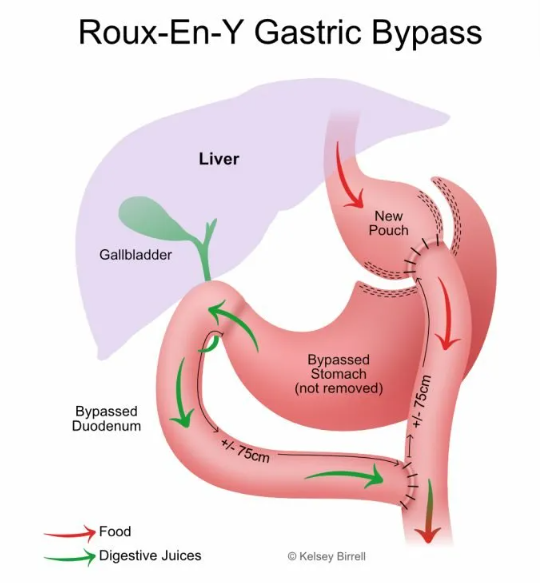
Roux-en-Y Gastric Bypass is one of the most established and effective bariatric procedures worldwide. Numerous medical studies have confirmed its ability to achieve significant and sustained weight loss, while also improving or resolving many obesity-related diseases such as type 2 diabetes and gastroesophageal reflux disease (GERD).
Although several surgical options are available for treating obesity, including Sleeve Gastrectomy and Mini Gastric Bypass, Roux-en-Y Gastric Bypass remains the preferred option in certain medical situations.
In this article, Dr. Ahmed Shinkar, Consultant of Laparoscopic and Bariatric Surgery, explains the most important cases in which Roux-en-Y Gastric Bypass surgery may be recommended.
Patients with Severe Acid Reflux (GERD)
Chronic gastroesophageal reflux disease (GERD) is one of the most important conditions where Roux-en-Y Gastric Bypass is often preferred over sleeve gastrectomy.
The procedure works by changing the pathway of food through the digestive system, which significantly reduces acid reflux from the stomach into the esophagus.
Roux-en-Y Gastric Bypass helps to:
- Reduce chronic heartburn symptoms
• Treat reflux-induced esophagitis
• Reduce the risk of developing Barrett’s esophagus
For this reason, many surgeons consider Roux-en-Y gastric bypass the gold standard treatment for obese patients suffering from severe GERD.
Patients with Type 2 Diabetes
One of the most important advantages of Roux-en-Y Gastric Bypass is its powerful effect on type 2 diabetes.
After the procedure, significant hormonal changes occur within the digestive system, leading to:
- Improved insulin sensitivity
• Reduced insulin resistance
• Rapid improvement in blood glucose levels
In many patients, complete remission of type 2 diabetes may occur within the first month after surgery, allowing them to stop diabetes medications or insulin therapy.
Interestingly, this improvement often occurs even before significant weight loss takes place.
Patients with Severe Morbid Obesity
In cases of severe morbid obesity, particularly when the Body Mass Index (BMI) is very high, surgeons may recommend Roux-en-Y Gastric Bypass.
This is because the procedure combines two powerful mechanisms:
- Restriction of food intake due to the small gastric pouch
• Partial reduction in calorie absorption
This combination helps patients achieve greater and more durable weight loss compared with some other bariatric procedures.
Patients with High Sugar Consumption
Some patients struggle with excessive consumption of sweets and sugary foods.
In such cases, Roux-en-Y Gastric Bypass may be particularly beneficial because consuming large amounts of sugar after surgery may trigger Dumping Syndrome.
This condition may cause symptoms such as:
- Dizziness
• Sweating
• Rapid heartbeat
Because these symptoms are uncomfortable, many patients naturally reduce their intake of sugary foods after surgery, which supports long-term weight loss success.
Revision Surgery After Failed Bariatric Procedures
In some patients, sleeve gastrectomy may not produce sufficient weight loss, or severe reflux may develop after the procedure.
In such cases, Roux-en-Y Gastric Bypass can be performed as a revision surgery.
The procedure may help to:
- Improve weight-loss results
• Treat severe acid reflux
• Repair associated hiatal hernia
Roux-en-Y Gastric Bypass is also considered the internationally preferred corrective procedure for failed vertical banded gastroplasty, historically known as the “butterfly stomach stapling” procedure.
Frequently Asked Questions About Roux-en-Y Gastric Bypass
Is Roux-en-Y Gastric Bypass better than Sleeve Gastrectomy?
Each procedure has its advantages. The most appropriate surgery depends on the patient’s medical condition. In certain cases, such as severe GERD or type 2 diabetes, Roux-en-Y Gastric Bypass may be the better option.
Can Roux-en-Y Gastric Bypass cure diabetes?
Yes. In many patients, type 2 diabetes improves dramatically or may completely resolve after surgery, due to hormonal changes in the digestive system.
How much weight loss is expected after Roux-en-Y Gastric Bypass?
On average, patients lose approximately 60% to 80% of excess body weight within the first 12–18 months after surgery.
Does food pass completely undigested after gastric bypass?
No. The human intestine is approximately 8–10 meters long, and gastric bypass typically excludes only the first 2 meters from the food pathway.
This results in a modest reduction in absorption of approximately 25–30%, meaning that about 70–75% of nutrients are still absorbed normally.
Therefore, the idea that food passes completely undigested is a common misconception and not medically accurate.
Additionally, the intestine gradually adapts over time. During the first two years after surgery, intestinal absorption capacity increases again, reaching approximately 90–95% of the original absorption capacity.